

Landscape & Outdoor Lighting in Burbank, CA
Light your paths, patio and trees so the yard works after dark
Or send the form for a free written estimate.
Get a free quote
What it costs. Landscape lighting runs about $80 to $300 per fixture installed, so 10 to 20 lights cost $800 to $6,000. (HomeGuide)
What we do. We plan and install path lights, uplights, downlights and patio lighting, wired to a transformer and a timer.
Free written estimate. We walk your yard, count the fixtures, and send a written estimate with each fixture listed. No pressure and no guesswork.
Low-voltage first. Low-voltage systems run off a 12-volt transformer, which is safer and uses less electricity. (HomeGuide)
Cheap to run. A landscape lighting system costs about $20 to $60 a year in electricity, less with LED bulbs. (HomeGuide)
Planned with the yard. We lay out lighting with planting and patios, so wire goes in once and nothing gets dug up twice.
Landscape Lighting in Burbank, CA
After sunset, most yards disappear. Landscape lighting Burbank CA homeowners hire us for puts light where you walk, sit and park, and picks out the trees and walls worth looking at. The result is a yard you can use in the evening, a path you can see and a front of the house that looks cared for from the street.
We design the layout, run the wire and set the fixtures, so one crew is responsible for the whole system. If you are also planning a patio, our paver patio and hardscape work can include the lighting from the start. For a full yard plan, see landscape design and installation, or our landscaping services overview.
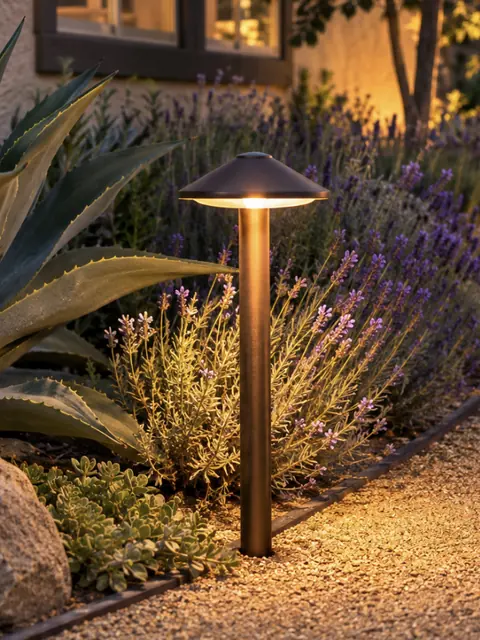
What Landscape Lighting Installation Involves
A good lighting plan starts with where you need light, not with the fixtures. Here is the order we work in.
-
Walk the yard and mark the zones
We look at how you use the yard after dark: the front walk, steps, driveway, patio, trees and any dark corners. We note where power is and where the wire can run.
-
Choose the fixtures and write the estimate
We match each zone to a fixture type, such as path lights, uplights or downlights, and price the transformer, wire and timer. Each fixture is listed in your written estimate.
-
Run the wire and set the fixtures
We trench or bury the wire, mount the transformer, connect each fixture and keep the work clear of your planting and irrigation lines.
-
Aim, set the timer and walk it with you
We adjust the aim and brightness once it is dark, set the timer and show you how the system works. You see the finished yard the way you will use it.
What Affects the Cost of Landscape Lighting
The number of fixtures, the type and how far the wire has to run decide the price. These are published cost-guide figures, and they include labor. Your written estimate gives the real number for your yard.
Landscape Lighting Cost by Number of Lights
| Number of lights | Average installed cost |
|---|---|
| 5 lights | $400 to $1,500 |
| 10 lights | $800 to $3,000 |
| 20 lights | $1,600 to $6,000 |
| 30 lights | $2,400 to $9,000 |
Source: HomeGuide, Landscape Lighting Cost (Dec 2023). National averages. Local bids can run higher or lower.
What Moves the Price Up or Down
- Fixture count and type. A pathway light and a large downlight sit at opposite ends of the price range.
- Wire distance. Trenching runs $5 to $12 per linear foot, and power to a lamp post costs $10 to $25 per linear foot.
- Power. A new outdoor outlet costs $180 to $350 installed, and a new GFCI outlet $150 to $350.
- Transformer and controls. A timer or remote adds cost, and so does a larger transformer.
- Fixture material. Plastic and aluminum cost less than steel, copper or brass.
- Permits. Some installs need one, usually when wiring is added or updated.
- Labor. Fixtures and supplies run $50 to $200 per light, and wiring and labor add $30 to $100.
Choosing the Right Fixtures
Each fixture does a different job. Most yards use a mix, which is why we plan by zone instead of by count.
| Fixture | Best for | Installed cost per light |
|---|---|---|
| Pathway lights | Walkways and the plants beside them. | $50 to $150 |
| Uplights | Trees, house walls and fountains. | $50 to $350 |
| Downlights | Highlighting sculptures, architectural features and planting from above. | $100 to $400 |
| Patio string lights | Mood lighting on a patio or pergola. | $50 to $150 |
| Lamp post or bollard | Driveways and spots far from the house. | $200 to $800 |
| Motion sensor lights | Doors and side yards where you want security lighting. | $100 to $500 |
Source: HomeGuide, Landscape Lighting Cost (Dec 2023).
Low-Voltage vs. Standard Outdoor Wiring
Most yard lighting uses low-voltage fixtures. They run off a 12-volt transformer, which makes the system safer to work around and less costly to run.
| Low-voltage lighting | Standard 120-volt lighting | |
|---|---|---|
| Power | A 12-volt transformer lowers the voltage, which is safer and more efficient. | Runs at full household voltage. |
| Cost | $100 to $150 per fixture installed. More labor up front, lower electricity cost later. | $50 to $250 for porch lights, up to $500 for motion sensor lights. |
| Best for | Paths, planting, trees and patios. | Porch, garage and security lights on the house. |
| Permits | Rules vary. Permits are usually needed only when wiring is added or updated. | Adding or updating house wiring is where permits usually come in. |
Source: HomeGuide, Landscape Lighting Cost (Dec 2023). Rules vary by city and by project. We tell you in the estimate whether any part of your job needs a permit or a licensed electrician.
How Many Lights Do You Need, and Where?
There is no single right number, but these rules of thumb from the cost guide help you check any quote. Too few lights leave dark gaps, and too many make the yard glare.
Spacing and Count
- One light per 50 to 60 square feet. That is how many lights most homes need across the property.
- Pathway lights 6 to 10 feet apart. Closer spacing makes a runway, wider spacing leaves dark patches.
- Near paths, driveways, trees and porches. These are the usual places to put light first.
- One circuit can carry a lot. A standard 120-volt, 15-amp circuit can handle up to 100 bulbs, depending on wattage.
Brightness
- Pathway lights: 100 to 200 lumens.
- Uplights: 50 to 300 lumens.
- Motion sensor lights: 300 to 700 lumens.
- LED bulbs cost $1 to $10 each, last longer and use less energy than halogen or incandescent bulbs.
Source: HomeGuide, Landscape Lighting Cost (Dec 2023).
When You Need Landscape Lighting
Lighting pays off when the yard goes dark and you wish it did not. Homeowners call us when:
- The front walk or steps are hard to see at night
- A new patio, deck or planting is not usable after sunset
- The house looks flat and dark from the street
- An old system has dim, burned out or buried fixtures
- They want a safer, better-lit yard without lighting up the neighbors
Lighting works best as part of a plan. If you are building a patio, planting beds or a walkway, run the wire first, so nothing gets dug up twice.
Why Lighting Systems Fail
Most problems trace back to the same few things. Cheap fixtures corrode or fill with water. Connections loosen or corrode where the wire meets a fixture. Too many fixtures on one transformer run dim. Plants grow up and block the light, and sprinklers soak fixtures that were never meant to sit in water. If you ignore it, the system fades fixture by fixture until the yard is dark again.
A professional install avoids most of this by sizing the transformer for the load, burying the wire where tools and roots will not reach it and keeping fixtures clear of spray. Outdoor fixtures are built to be weatherproof, and HomeGuide notes many carry a lifetime warranty, which is part of why they cost more.
Repairing vs. Replacing an Old System
If your wiring and transformer are sound, you can often keep them and replace the fixtures or bulbs. LED bulbs last longer and use less energy than older halogen or incandescent bulbs, so swapping them is a common first upgrade. If the wire is damaged, the transformer is undersized or the layout no longer fits your yard, a new system is the better value. We tell you which one you have before we quote.
Landscape Lighting Questions We Hear Most
Is landscape lighting worth the cost?
Many homeowners find it is, because it adds usable evening hours, safety and curb appeal. HomeGuide also notes it can raise home value. We cannot promise a return, but we will size the system to your budget and list every fixture in the estimate.
How much does it cost to run landscape lights?
About $20 to $60 a year, or $2 to $5 a month, depending on your location, the number of lights and the bulb type. LED bulbs cost the least to run.
Do I need a permit for landscape lighting?
Some installs do, depending on local rules and the scope of the job. Permits are usually needed only when wiring is added or updated. We check what applies to your project and tell you in the estimate.
Should I choose solar or wired lights?
Solar lights are easy to install and need no wiring, which makes them a fair choice for a small, low-light spot. Wired low-voltage lights are brighter and more reliable, and a single transformer and timer run the whole system.
Can you add lighting to a yard that is already finished?
Yes. We route the wire around existing planting, hardscape and irrigation lines, and we aim to disturb as little as possible. It costs less when it is planned with the yard, but it is very doable after the fact.
Ready to Light Up Your Yard?
Call for a free, no-pressure consultation. We walk your yard, plan the fixtures and follow up with a written estimate that lists each light.