
Xeriscaping & Turf Removal in Burbank, CA
Less water, lower bills, a yard that actually thrives here
Or send the form for a free written estimate.
Get a free quote
What it costs. Drought-tolerant planting runs about $6 to $18 per square foot, and removing the old lawn adds $0.50 to $2.00. (HomeGuide, 2026)
What we do. We remove the lawn, grade the soil, plant natives and Mediterranean plants, add gravel or mulch, and set up drip irrigation.
Free written estimate. We walk your yard, measure the turf, take photos and send a written estimate. No pressure and no guesswork.
Rebate first. We check your project against the city rebate rules before any turf comes out, because you must apply first.
Hillside prep. On Verdugo foothill lots we check drainage and grading before we choose a single plant.
Lawn rebate. The city water utility pays up to $3 per square foot to replace lawn, with a 250 square foot minimum. (BWP)
Xeriscaping in Burbank, CA
Tired of watching your water bill climb every summer to keep a lawn alive that never looks that good anyway? Xeriscaping Burbank CA homeowners ask us about means replacing thirsty turf with native and Mediterranean plants that handle hot, dry summers instead of fighting them. We design and install drought-tolerant yards for homeowners across our service area, and we plan each one around the city's lawn rebate so you can collect it.
One crew handles the whole job: removing the old lawn, grading, planting, gravel or mulch, and drip irrigation sized to each plant. The result looks like a planned garden, not a stripped yard. Looking at the bigger picture first? Our landscaping services overview lists everything else we build and repair.
What Drought-Tolerant Landscaping Involves
Turf removal is the first step, not the whole job. Here is the order we work in, so you know what happens and when.
-
Measure and check the rebate
We walk the yard, measure the living turf and check the project against the rebate rules. You apply and wait for approval before any grass is removed.
-
Remove the lawn and prepare the soil
We take out the turf and old sprinkler heads, then grade the area so water soaks in instead of running off. Soil amendments go in where the ground is compacted.
-
Plant and cover the ground
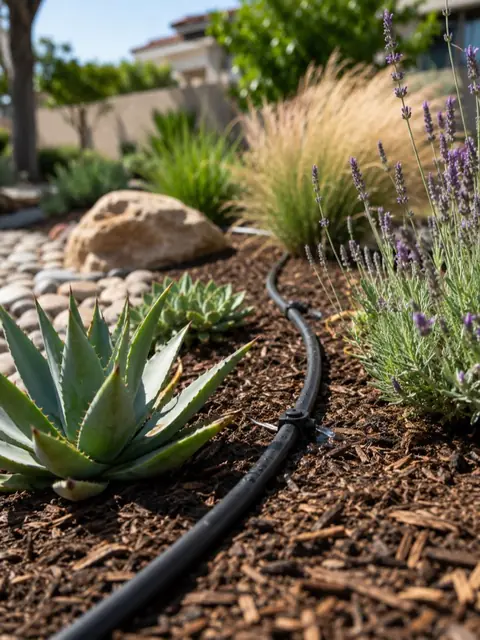
We plant California natives, Mediterranean plants and ornamental grasses chosen for how they look together. Mulch, decomposed granite or gravel fills the gaps to cut weeds and evaporation.
-
Convert the irrigation
We replace overhead sprays with drip lines sized to the mature plants, test every zone and show you how to set the controller.
What Affects the Cost of Turf Removal and Xeriscaping
The size of the area and what sits under the lawn decide most of the price. These are published cost-guide figures. Your written estimate gives the real number for your yard.
What Moves the Price Up or Down
Two yards the same size can price very differently. These are the items that change the number most.
- Size of the area. More square feet means more plants, more material and more crew hours.
- Lawn and irrigation removal. Thick sod, old sprinkler lines and haul-away all add labor.
- Plant size and density. A yard of one-gallon plants costs less up front than one with large specimens, though the small plants take longer to fill in.
- Hardscape. Decomposed granite paths and boulders add cost beyond the planting.
- Grading and drainage. Slopes and runoff problems take more work, and hillside lots often need the most. See our yard drainage work for runoff fixes.
- Irrigation. Converting sprays to drip is a per-zone cost, so more zones mean a higher total.
- Rebate requirements. Plant counts, mulch depth and a stormwater feature can add items to the plan. The rebate can offset them.
Prices are national averages from HomeGuide, Landscaping Costs (Feb 2026) and Lawn Replacement Cost (Nov 2025). Local bids can run higher or lower.
The City Turf Removal Rebate
Burbank Water and Power (BWP) pays up to $3 per square foot to replace lawn, but only for projects that follow the program terms. Funds are limited and terms change, so confirm the current rules before you apply. These are the rules that trip people up most.
What Your Finished Yard Must Include
- 250 square feet or more of living turf removed. Dead lawn and bare dirt do not qualify.
- Three plants per 100 square feet. Turf-like grasses and invasive plants do not count.
- A three-inch mulch ring around every plant, with mulch, rock or decomposed granite over other bare soil.
- Drip or other low-flow irrigation. No overhead sprays in the finished yard.
- No artificial turf anywhere in the project area.
What Gets a Rebate Denied
- Starting early. You must apply and get a reservation of funds before any turf comes out.
- Paving the project area. Raised patios, decks, concrete and grouted paths disqualify those areas.
- Missing a requirement at the end. The payout can come in below the amount reserved if the finished yard misses a rule.
Source: BWP, Turf Replacement Rebate through SoCalWaterSmart, read in November 2026. See the full rebate rules on our homepage.
Partial Conversion vs. Full Yard Replacement
You do not have to convert the whole yard at once. Here is how the common approaches compare, so you can match the job to your budget and timeline.
| Approach | Best for | Why choose it | Tradeoff |
|---|---|---|---|
| Front yard only | Homeowners who want curb appeal and water savings first. | The front yard is what neighbors see, and it spreads the cost over time. | The backyard lawn keeps using water until you convert it. |
| Keep a small lawn | Families and pet owners who want a patch of grass. | You keep a play area and still cut most of the watering. | You still mow, and the rebate only covers the turf you remove. |
| Full yard | Yards where the irrigation needs replacing anyway. | You get the most water savings and one clean, matched design. | Highest cost up front, and more area to establish at once. |
When You Need Drought-Tolerant Landscaping
The clearest sign is a water bill that keeps climbing while the lawn looks worse every year. Homeowners also call us when:
- Patchy, brown or weedy grass keeps coming back after every repair
- They are tired of mowing and edging every week
- Watering restrictions make a traditional lawn hard to keep
- They want the turf rebate before the program rules or funding change
- Sprinkler runoff is pooling on the walkway or the street
If your yard needs more water than you want to keep paying for, a walk-through shows what a water-wise version would look like and what it would cost.
Why Lawns Struggle in Our Climate
A traditional lawn is the wrong plant for a hot, dry summer. Many common lawn grasses were bred for milder, wetter places, so they need constant watering to stay green and still go patchy by late summer. Ignoring the mismatch means paying for more water every year to keep a lawn that never thrives.
Compacted soil makes it worse. Water runs off instead of soaking in, and shallow sprinkler watering trains roots to stay near the surface instead of growing deep. None of that is a maintenance failure on your part. It is a mismatch between the plant and the place, and a drought-tolerant redesign corrects it.
Professional installation matters here because the first year decides the outcome. Plants set at the right depth, in graded soil, on drip lines sized to their mature size, establish deep roots and then need little water. The same plants set in unprepared soil on the old sprinkler system often struggle.
Xeriscaping Questions We Hear Most
How much water does drought-tolerant landscaping save?
Established native and Mediterranean plants need a fraction of what a lawn requires once they settle in. The exact savings depend on how much turf you remove and how the new irrigation is set up, so we cannot promise a figure before we see your yard.
Will a drought-tolerant yard look bare or rocky?
Not if it is designed well. A good plan layers different heights, textures and bloom times, so it reads as a garden rather than a gravel yard with a few plants. We design for how the space will look, not only for how little water it uses.
Am I eligible for a turf removal rebate?
Eligibility depends on your water provider and on the size and type of project. BWP customers can apply for up to $3 per square foot, with a 250 square foot minimum and approval before work starts. We check your address and plan before you apply.
Can I use artificial turf and still get the rebate?
No. The program does not allow synthetic turf in the project area. If you want the rebate, the replacement must be water-wise planting. Artificial turf can still suit a side yard or play area, and we cover that on our artificial turf installation page.
How long before the new landscaping fills in?
Many drought-tolerant landscapes fill in noticeably in the first growing season and look mature after two to three years, depending on the plant sizes you start with. Most still need occasional deep watering while roots establish in the first year or two. We can use larger plants in key spots if you want more impact right away. If your sprinklers also need work, see sprinkler and irrigation repair.
Ready to Cut Your Water Bill?
Call for a free, no-pressure consultation. We walk your property, check it against the rebate rules and follow up with a written estimate.