
Artificial Turf Installation in Burbank, CA
A green lawn year-round, without the water bill
Or send the form for a free written estimate.
Get a free quote
What it costs. Installed artificial grass runs about $10 to $25 per square foot, so a 1,000 square foot yard lands between $10,000 and $25,000. (HomeGuide, 2025)
What we do. We remove the lawn, grade for drainage, compact a crushed rock base, lay and seam the turf, then add infill and edging.
Free written estimate. We walk your yard, measure, take photos and send a written estimate. No pressure and no guesswork.
Pet-friendly options. Pet turf has enhanced drainage, and odor-control infill is available if dogs use the yard daily.
Base prep first. The base decides how long turf stays flat, so we plan grading and drainage before we order a single roll.
Rebate note. The city lawn rebate does not cover synthetic turf. We tell you up front which choice fits your goal. (BWP)
Artificial Turf in Burbank, CA
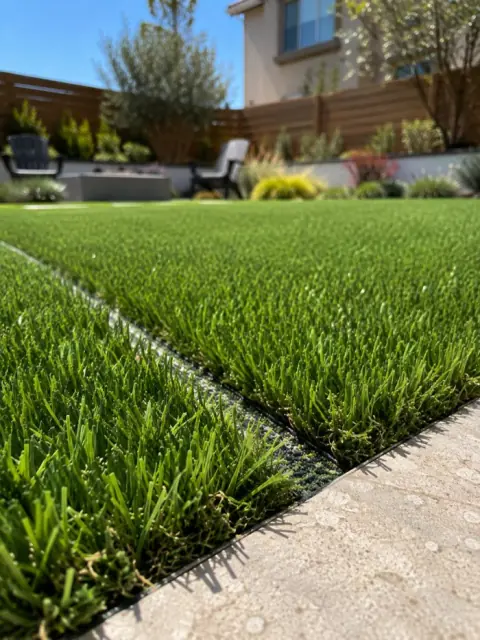
A lawn that stays green without a sprinkler, a mower or a water bill sounds like a good deal, and for the right yard it is. Artificial turf Burbank CA homeowners choose for side yards, small lots, play areas and shady spots gives them grass-colored ground all year. We install it for homeowners across our service area, and we build the base underneath so the surface stays flat for years.
The same crew handles the whole job, from removing the old lawn to trimming the last seam. If you are still deciding between turf, real sod and water-wise planting, our landscaping services overview puts every option in one place.
What Artificial Turf Installation Involves
Good installation is mostly about what happens before the turf is rolled out. Here is the order we work in.
-
Remove the old lawn and prepare the site
We take out the grass, weeds and roots, dig out several inches of soil and cap old sprinkler heads so they cannot leak under the turf.
-
Grade and build the base
We grade the area so water drains away from the house, then compact a layer of crushed rock or decomposed granite. Proper drainage keeps water from pooling under the turf.
-
Lay and seam the turf
A weed barrier goes down first. We then roll out the turf, cut it to fit and seam it so the blades line up and the joints disappear.
-
Infill, edging and final check
Infill keeps the blades upright and adds cushioning. We secure the edges along walkways and planting beds, then walk the finished yard with you.
What Affects the Cost of Artificial Turf
Square footage, turf quality and site prep decide the price. These are published cost-guide figures, and they include labor and materials. Your written estimate gives the real number for your yard.
Artificial Turf Cost by Yard Size
| Yard size | Average total cost |
|---|---|
| 400 sq ft | $4,000 to $10,000 |
| 750 sq ft | $7,500 to $18,750 |
| 1,000 sq ft | $10,000 to $25,000 |
| 1,500 sq ft | $15,000 to $37,500 |
Totals include labor and materials. Source: HomeGuide, Artificial Grass Cost (Oct 2025). Local bids can run higher or lower.
What Moves the Price Up or Down
- Turf material and quality. Denser pile, taller blades and stronger backing cost more.
- Old lawn and debris removal. Disposal fees can add to the total, so check that your estimate includes haul-away.
- Grading and drainage. Sloped or uneven ground needs more base work and sometimes a drainage system.
- Obstacles. Trees, beds and paths take extra time to measure, cut and fit.
- Access. A narrow gate to the backyard makes delivery and equipment harder.
- Add-ons. Odor-control infill, a shock pad layer, UV stabilization and antimicrobial backing each add cost.
Choosing a Turf Product
Most residential lawns use a pile height of 1 to 2 inches. The fiber material is the bigger decision, because it sets how the turf feels, how long it lasts and what it costs.
| Material | Best for | Strength | Tradeoff |
|---|---|---|---|
| Polyethylene | Most front and back lawns, where soft feel and a natural look matter. | Soft, realistic and resistant to UV damage, so it holds its color. | Costs more than polypropylene. |
| Polypropylene | Low-traffic areas on a tight budget. | The most budget-friendly option. | Less durable and can flatten under heavy use. |
| Nylon | High-traffic zones and play areas. | The strongest and most resilient, even in extreme temperatures. | Premium price. |
Source: HomeGuide, Artificial Grass Cost (Oct 2025).
When You Need Artificial Turf
Turf makes the most sense where real grass never had a chance. Homeowners call us about:
- Side yards and small lots where grass never gets enough sun or space
- High-traffic areas where kids or pets wear grass down faster than it recovers
- A weekly mowing and watering routine they are tired of
- A lawn conversion for water savings, when they still want the look of grass instead of gravel
If you want the city's lawn rebate, turf is not the right pick. The program requires water-wise planting, so read about xeriscaping and turf removal first. If you want real grass, see sod installation.
Why Real Grass Struggles Here
Many lawn grasses were bred for milder, wetter places than a hot, dry San Fernando Valley summer. They need frequent watering just to survive, and they still thin out, go patchy or brown in the heat. Shade from mature trees, foot traffic from kids and pets and compacted soil make it worse.
Artificial turf sidesteps the problem because it needs no water, sunlight or good soil to look green. It does need a properly built base, and that is the part homeowners underestimate most often. A thin or poorly compacted base shifts, develops low spots and traps water, which shortens the life of even good turf.
New Installation vs. Replacing Old Turf
If your existing turf has gone flat, faded or started to smell despite regular cleaning, the infill and base have usually broken down, not the material. In some cases we can refresh the infill to extend its life. Once the backing has degraded or the base has settled into low spots, replacement is the more reliable fix, because patching an aging install rarely lasts as long as a fresh, solid base.
Artificial Turf Questions We Hear Most
Is artificial turf safe for pets?
Quality artificial grass is non-toxic and safe for children and pets. Pet turf has enhanced drainage that lets liquid pass through instead of pooling, and odor-control infill helps. Remove waste promptly and rinse the area regularly, even with several dogs using the yard.
How hot does artificial turf get in the sun?
It can run warmer than real grass on a direct-sun summer afternoon, much as a dark driveway does. Shade helps, and a quick rinse with a hose cools the surface fast if bare feet or paws are a concern.
How long does artificial turf last, and what does it need?
Quality turf lasts 15 to 25 years with proper care, depending on the product and how much traffic it sees. Care is light: clear leaves with a blower, rinse it occasionally and brush the blades upright in busy spots. There is no mowing, fertilizing or watering.
Can artificial turf go over existing concrete or pavers?
Sometimes, with the right drainage plan and surface prep. We assess the surface during your estimate and tell you whether it is a good candidate or whether removal makes more sense.
Does artificial turf qualify for the city lawn rebate?
No. Burbank Water and Power does not allow synthetic turf in a rebate project area. If you want the rebate, the replacement must be water-wise planting. Turf can still be the right choice for a side yard or play area outside the rebate area.
Ready for a Lawn That Stays Green?
Call for a free, no-pressure consultation. We walk your yard, measure it and follow up with a written estimate that lists the turf product and the base.