
Paver Patios & Hardscape in Burbank, CA
Patios and paths built on a base that stays flat
Or send the form for a free written estimate.
Get a free quote
What it costs. A paver patio runs about $10 to $17 per square foot installed, so a 12 by 12 foot patio costs $1,400 to $2,500. (HomeGuide)
What we do. We design and build paver patios, walkways and garden paths, with the base, edging and joint sand done right.
Free written estimate. We walk your yard, measure, take photos and send a written estimate. No pressure and no guesswork.
Base first. Excavation, compacted rock, bedding sand and edging decide how long pavers stay level, so we price them in plainly.
Hillside prep. On Verdugo foothill lots we check grading and drainage before we set a single paver.
Rebate note. Paving a lawn area can affect the city turf rebate. We plan the layout around the rules before you apply. (BWP)
Patio Pavers in Burbank, CA
A bare dirt corner or a cracked concrete slab is wasted space. Patio pavers Burbank CA homeowners ask us about turn that space into a place to eat, sit or walk, with a surface that is easy to repair and looks the part. We design and build paver patios, walkways and garden paths for homeowners across our service area.
One crew handles the work from excavation to the final joint sand, so the base under your patio is built by the people who set the stones. Want the patio planned together with planting and lighting? Our landscape design and installation service covers the whole yard, and our landscaping services overview lists everything else we build.
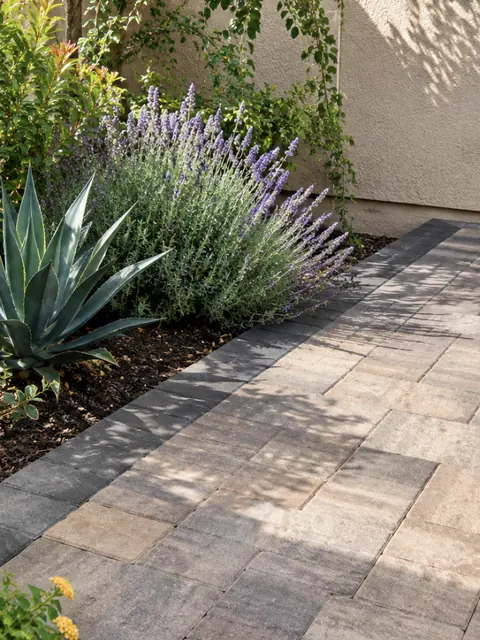
What a Paver Patio Installation Involves
Most of a paver job is below the surface. Here is the order we work in.
-
Plan the layout and measure
We walk the yard with you, mark the patio or path, check drainage and agree on the paver type and pattern. You see the written estimate before work starts.
-
Excavate and build the base
We dig out the area, grade it so water runs away from the house, lay fabric and compact a crushed rock base. This layer carries the weight and keeps the surface level.
-
Set the pavers and edging
We screed a bed of sand, lay the pavers in your pattern and cut them to fit. Edging goes in around the perimeter, because without it the pavers slowly shift and gaps open up.
-
Fill the joints and finish
Polymeric sand fills the joints and hardens, which keeps weeds from taking root. We sweep, compact and walk the finished patio with you, and we can seal it if you want it.
What Affects the Cost of a Paver Patio
Size, material and base work decide the price. These are published cost-guide figures. Your written estimate gives the real number for your yard.
Paver Patio Cost by Size
| Patio size | Average installed cost |
|---|---|
| 10 x 10 ft | $950 to $1,700 |
| 12 x 12 ft | $1,400 to $2,500 |
| 15 x 15 ft | $2,200 to $3,900 |
| 20 x 20 ft | $3,800 to $6,800 |
| 24 x 24 ft | $5,500 to $9,800 |
Source: HomeGuide, Paver Patio Cost (Sept 2024). National averages. Local bids can run higher or lower.
What Moves the Price Up or Down
- Pattern and layout. Intricate patterns and angled layouts mean more cuts, more waste and more labor.
- Excavation. Digging runs $1 to $5 per square foot, and removing old concrete adds more.
- Grading and slope. Regrading costs $0.40 to $2.00 per square foot, and a slope or thicker base adds to it.
- Paver material. Concrete, clay brick and natural stone price very differently.
- Sealing. Sealing pavers costs $1.50 to $3.25 per square foot, including cleaning and fresh joint sand.
- Access and delivery. Tight side yards make hauling harder, and delivery adds about $0.50 per square foot.
- Waste. Plan on 10% extra material, or 20% extra for angled patterns.
Choosing a Paver Material
The paver itself is a small share of the bill, since pavers average $2 to $4 per square foot before labor. The material you pick sets the look, the upkeep and the finished price.
| Material | Installed cost | Best for | Good to know |
|---|---|---|---|
| Concrete pavers | $8 to $15 per sq ft | Patios, driveways and pool decks, in many colors and shapes. | Requires sealant. |
| Clay brick pavers | $10 to $17 per sq ft | Patios and hardscaping with a classic look. | Lasts up to 25 years. Can chip and have a slick surface. |
| Natural stone pavers | $8 to $14 per sq ft | Walkways and patios. | Needs little maintenance and lasts up to 25 years. |
| Permeable pavers | $4 to $12 per sq ft for the pavers alone | Areas where water should soak in instead of running off. | Ask us whether a product suits your site and the rebate rules. |
Source: HomeGuide, Paver Patio Cost (Sept 2024). Paver-only prices exclude the base and labor.
Pavers vs. Concrete
Concrete costs less up front, and pavers cost less over the life of the patio when something goes wrong. Here is how they compare.
| Pavers | Concrete slab | |
|---|---|---|
| Cost | $10 to $17 per sq ft installed, about twice a slab. | $4 to $8 per sq ft, more with coloring or stamping. |
| Repairs | Easier to repair. We lift the affected pavers, fix the base and reset them. | Repairs are harder, and a patch is hard to hide. |
| Look | Many colors, patterns and textures. | Plain unless it is stamped or colored. |
| Best when | You want a finished look that is easy to fix later. | The lowest first cost matters most. |
Source: HomeGuide, Paver Patio Cost (Sept 2024).
Pavers and the City Lawn Rebate
Burbank Water and Power (BWP) pays up to $3 per square foot to replace lawn, but paving the project area can cost you the rebate. If you plan a patio and a lawn replacement together, the layout matters. Funds are limited and terms change, so confirm the current rules before you apply.
What the Rebate Rules Say About Paving
- Hard surfaces disqualify those areas. Raised patios, decks, concrete and grouted paths do not count toward the rebate area, so leave them out of your measurements.
- The surface must be permeable. Air and water have to pass through. Flagstone or broken-concrete paths are allowed if they are not grouted with cement, with loose sand as the usual filler.
- Apply first. You must apply and receive a reservation of funds before you remove any turf.
The City Front Yard Limit
- The 45% cap. No more than 45 percent of the required front yard or street-facing side yard setback can be hardscaped. Concrete, asphalt, brick, pavers and similar paved surfaces all count.
- Plan the patio and the planting together. A front yard that is mostly patio can run into the cap before any plant goes in.
Source: BWP, Turf Replacement Rebate through SoCalWaterSmart, read in November 2026. See the full rebate rules on our homepage and our xeriscaping and turf removal page.
When You Need a Paver Patio or Walkway
Hardscape earns its cost when a part of the yard does not work as it is. Homeowners call us when:
- The yard has no usable place to sit, eat or entertain
- A lawn path is worn to dirt where everyone walks
- An old concrete slab is cracked, stained or heaving
- A side yard is bare, muddy or full of weeds
- They are redoing the yard and want a defined edge between lawn and planting
If you want a patio and a water-wise yard, plan them as one project. If the yard is only a lawn and a few shrubs, a patio often gives the biggest change for the money.
Why Patios and Walkways Fail
Most failed paver patios trace back to the base. If the crushed rock is thin or poorly compacted, the pavers sink in spots, water pools and joints open. Missing or weak edging lets the whole field creep outward, and gaps form around the perimeter. If you ignore it, trip hazards and weeds follow, and the repair gets larger each season.
Drainage is the second cause. Water that runs toward the house, or sits on a flat spot, washes out the sand bed and undermines the base. That is why we grade before we build and why we check slope on hillside lots. If water already collects on the site, a French drain or trench drain can move it out first.
Resetting Pavers vs. Replacing the Patio
If a few areas have sunk, the base has usually settled in those spots. We lift the pavers, rebuild and compact the base, and reset the same stones. If the base failed across the whole patio, or the slab under it is cracked, relaying the full patio is the more reliable fix. We tell you which one you have before we quote.
Paver Patio Questions We Hear Most
Do I need a permit for a paver patio?
HomeGuide says a permit is generally not required for a brick paver patio, but rules vary by city and by what you build. Walls, drainage changes and larger projects can trigger one. We check what applies to your project during the estimate.
How long does a paver patio take to build?
HomeGuide puts a two-person crew at about 100 square feet of pavers per day, before excavation and base work. A small patio can take a few days and a large one more than a week. We give you a timeline for your project in the estimate.
Are pavers better than poured concrete?
Pavers cost about twice as much as a plain slab, but they are easier to repair and come in more colors and patterns. A slab is cheaper up front. We help you pick based on your budget and how long you plan to stay.
Do pavers need to be sealed?
Concrete pavers require a sealant, while stone and brick need less upkeep. Sealing costs $1.50 to $3.25 per square foot, including cleaning and fresh joint sand. We tell you whether your product needs it.
Will a patio affect my lawn rebate?
It can. Hard surfaces inside the rebate area do not qualify, and the city caps hardscape at 45 percent of the front yard setback. Plan the patio and the lawn replacement together, and apply before any work starts.
Ready to Build Your Patio?
Call for a free, no-pressure consultation. We walk your yard, measure the space and follow up with a written estimate that lists the base, the pavers and the edging.